Without coordination between international climate and biodiversity policies, some climate mitigation and adaptation measures may harm ecosystems that conservation efforts seek to protect. Preventing these impacts requires aligning multilateral agreements with national implementation and distinguishing actions that benefit both the climate and biodiversity from those that may have adverse effects.
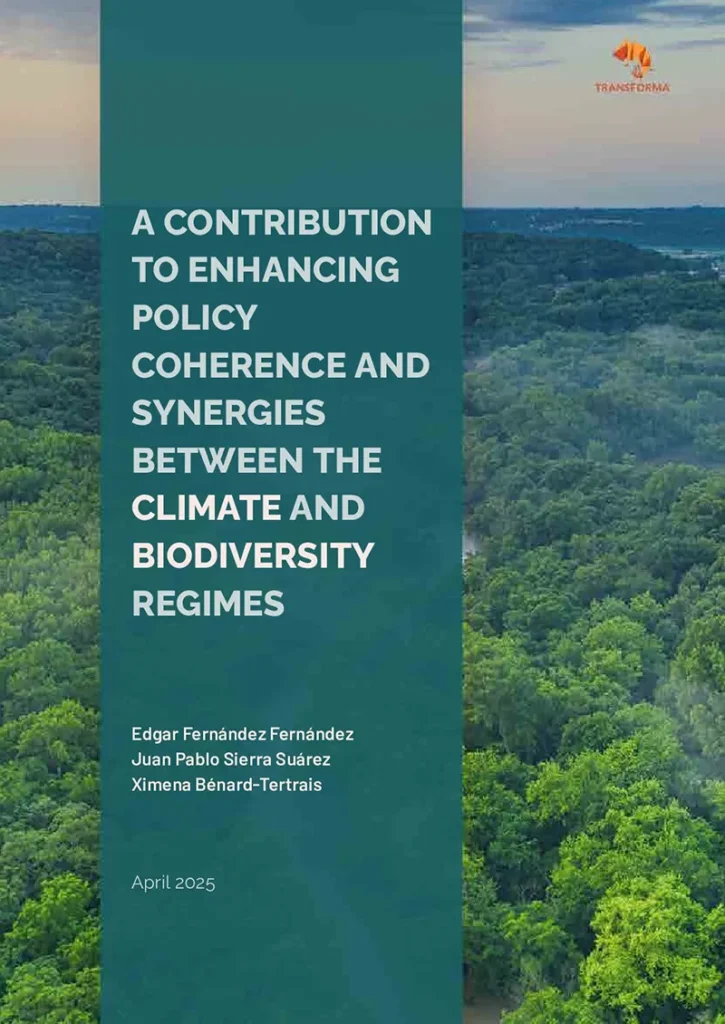
In April 2025, Transforma published an analysis of the relationship between the United Nations Framework Convention on Climate Change (UNFCCC) and the Convention on Biological Diversity (CBD). It identified a coordination gap: there is no dedicated space at the UNFCCC and the Paris Agreement to deal with synergies between biodiversity and climate change, as well as a lack of substantive consideration of issues under the SBSTA agenda item on cooperation with relevant international organizations.
The study identified opportunities to strengthen that cooperation and better inform national decision-making. It also examines the limitations of nature-based solutions, prospects for scientific collaboration, and the need for transparent reporting of financial resources allocated to climate and biodiversity objectives.
Key Recommendations
- Create or reactivate dedicated space to deal with cooperation and synergies. The study proposes having a dedicated space to review and give guidance to Parties on these issues, and for communicating and exchanging invitations and responses with the bodies of the CBD is key for the implementation of the UNFCCC and the Paris Agreement.
- Coordinate national plans. Nationally determined contributions (NDCs) on climate change and national biodiversity strategies and action plans (NBSAPs) require political and technical coordination structures so countries can develop and implement compatible commitments.
- Address financial issues. The study proposes to analyze the biodiversity finance gap, the climate finance gap, and the double- or triple-counting in developed countries’ finance for unlocking more significant support for synergies by Parties at the Conventions level.
Read or download the full report to explore options for cooperation, the risks associated with climate action, and proposals on climate and biodiversity finance.
There is a need for more integrated and holistic signals from the international climate and biodiversity policy arenas that would enable countries and other stakeholders to plan and implement their actions to tackle these and other societal challenges and global crises simultaneously and coherently.
How to cite the document
Fernández Fernández, E., Sierra Suárez, J. P., & Bénard-Tertrais, X. (2025). A contribution to enhancing policy coherence and synergies between the climate and biodiversity regimes. Transforma.
COP30, scheduled to take place in Brazil, presents an opportunity to link climate policy decisions with progress under the Convention on Biological Diversity. Contributing technical proposals to support that coordination is a way to influence international discussions, aligned with Transforma’s programmatic priority of «Latin American Leadership and Influence.»

Toward Climate Decisions That Integrate Biodiversity
Transforma’s “Latin American Leadership and Influence” priority seeks to strengthen the region’s capacity to participate in international climate decision-making. To advance coordination between the climate and biodiversity agendas, the study proposes the following courses of action, among others:
- Multilateral decisions: agree on implementing the first global stocktake outcomes and Article 5 of the Paris Agreement—conserving carbon sinks, including forests—through cooperation mechanisms.
- Scientific cooperation: promote assessments and workshops involving IPBES (biodiversity science-policy platform) and IPCC (climate science panel) to identify where climate and biodiversity policies reinforce each other or create risks.
- National planning: strengthen coordination across ministries to integrate the climate and biodiversity agendas, drawing on progress in countries such as Colombia and Panama.
Closer coordination among international negotiations, scientific expertise, and national planning could strengthen the region’s ability to influence climate decisions that incorporate biodiversity conservation and social and environmental safeguards.