The experience of recent years offers a lesson for Colombia and the region: installing technologies is only the beginning. What determines whether an energy community can operate over time is its ability to organize itself and make decisions.
What are energy communities?
Colombia’s National Development Plan defines them as associations of users or potential users of energy services that come together to generate, commercialize, and/or use energy efficiently through non-conventional sources of renewable energy (FNCER), renewable fuels, and distributed energy resources (Ley 2294 de 2023, art. 235).
In practice, they can be community action boards, Indigenous reserves, rural schools, or merchants’ associations that produce energy using photovoltaic solar systems or small hydropower plants (PCHs), among other technologies. The electricity generated can cover their own consumption, while surplus electricity can be sold to the grid. The resulting revenue is distributed or reinvested according to agreements among members.
How does an energy community work?
Regulations recognize two ways in which a community can participate in the electricity system (MinEnergía, 2026, pp. 34-36):
- Collective self-generation (AGRC): the community produces energy primarily for its own consumption, with the option of selling surplus electricity to the grid.
- Collective distributed generation (GDC): the community generates electricity connected to a local distribution system or microgrid for sale.
Energy communities and the democratization of energy
For decades, electricity has been supplied through a centralized model in which large companies generate, distribute, and sell electricity until it reaches households, which pay for the service. Energy communities change this model.
This shift is particularly relevant in Latin America, where, despite approximately 97% of the population having access to electricity, power outages in 2019 lasted 16 times longer than in the European Union. Countries such as Brazil, Chile, Costa Rica, Argentina, and Panama already have community-based initiatives aimed at strengthening citizen participation in the energy system (AIE, 2024).
In Colombia, the energy communities program has received more than 18,000 applications since its creation. As of July 2026, it had established 589 communities across 130 municipalities, benefiting more than 20,000 users (MinEnergía, 2026, p. 13).
These initiatives are particularly relevant in non-interconnected zones (ZNI), territories that are not reached by the national electricity grid. Many communities in these areas face greater challenges in accessing electricity, as well as geographical isolation and climate vulnerability. In these territories, energy communities can help address local needs and contribute to a just energy transition (WRI Colombia, 2026).
You may also be interested in: Complementary methodologies for monitoring energy communities in Colombia.
Beyond installation: governance determines the future of an energy community
Installing a technology does not guarantee that a community will be able to keep it running or manage the benefits it generates. To do so, its members need agreements on operations, the allocation of responsibilities, resource management, and maintenance funding.
Transforma supports energy communities manage their systems autonomously and sustainably over time by strengthening the technical, administrative, and financial capacities they need to manage and operate their systems and make decisions about their future.
This work is reflected in three experiences that show how strengthening community energy management enables communities to take an active role in the energy transition.
Electropalmor: a small hydropower plant in Magdalena
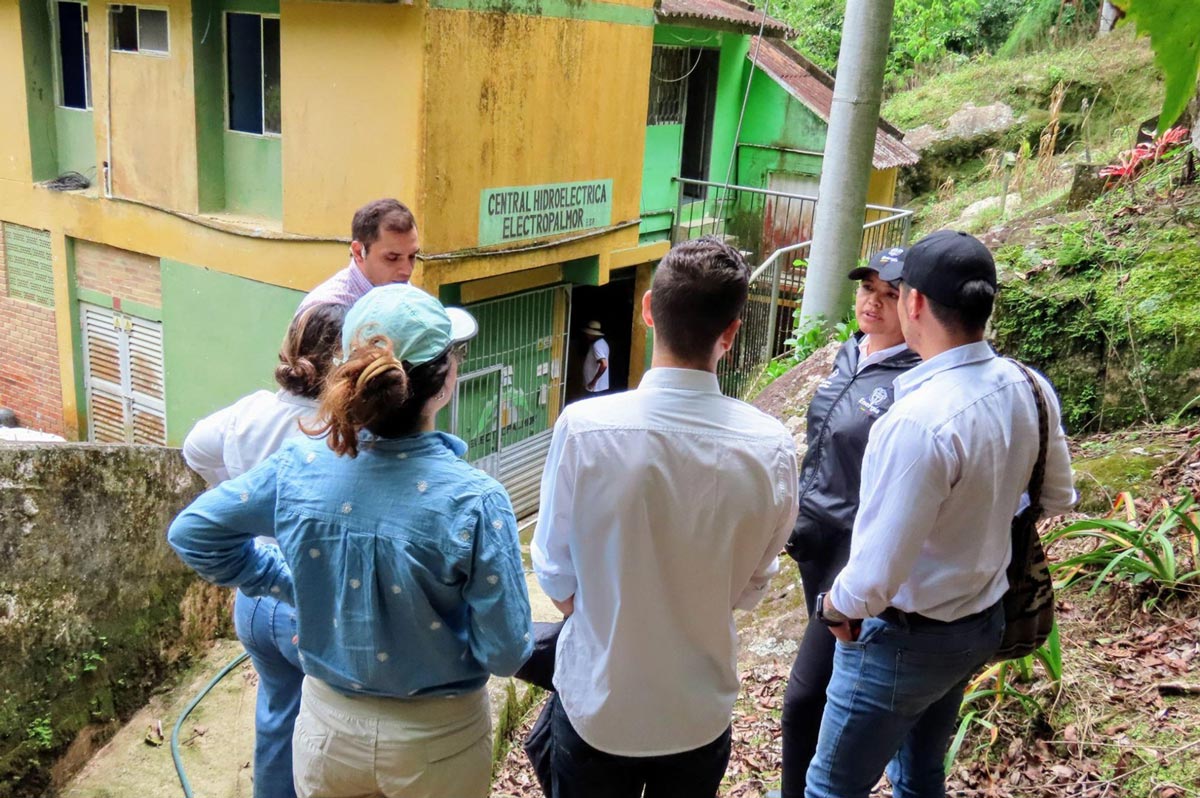
In Palmor de la Sierra, a rural district of Ciénaga (Magdalena), the nonprofit association ELECTROPALMOR E.S.P. has operated a small hydropower plant since the early 1990s, supplying electricity to more than 600 users.
With support from Transforma, the community is taking responsibility for maintaining the small hydropower plant itself. Technical corrective measures are expected to increase electricity generation by 36%, while the adoption of safety protocols has improved its capacity to respond to electrical hazards by 27%.
The association has also strengthened its accounting records, allowing it to better understand its financial situation and plan the resources needed to keep the small hydropower plant operating.
«This will allow us to strengthen our technical, operational, administrative, and financial capacities». — Sol Zapata, executive director of the Electropalmor energy community
UNDECO Santa Marta: small shop owners embrace solar energy
Twenty small shop owners who are members of the UNDECO Santa Marta energy community have photovoltaic solar systems installed at their businesses. Thanks to the capacity-building process, they can now carry out basic preventive maintenance, manage their energy demand, and monitor the performance of their equipment.
This autonomy makes it possible to sustain reductions of up to 60% in each business’s monthly electricity bill over time.
ASOTUK CABO: electric mobility for community-based tourism
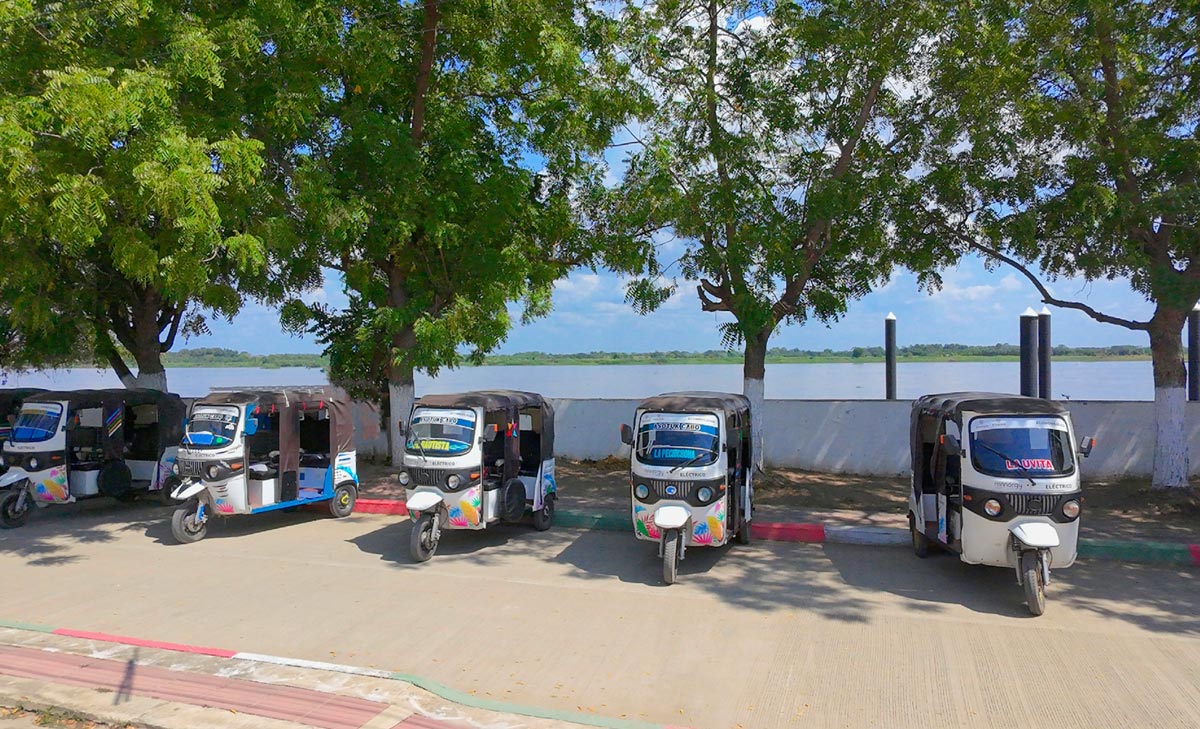
In Calamar (Bolívar), members of the Calamar Tourist Transport Association, ASOTUK CABO, provide community-based tourism services using electric tuk-tuks. Before working with Transforma, members lacked a clear understanding of the technical procedures needed to optimize battery charging, carry out preventive maintenance on the tuk-tuks, and manage the community’s operation, maintenance, and administration (O&M).
The association now has a better understanding of its operating procedures and has formalized roles for collectively managing its electric mobility system. Seventy-seven percent of its members completed the training process and made governance commitments. With this organizational structure in place, the association plans to expand its fleet from 13 to 50 vehicles.
These communities have evolved from users with installed energy solutions into organized entities with roles, rules, and management tools that enable them to make decisions about their energy, setting a precedent for other energy communities across the region.
These experiences show how the energy transition can also be built from within territories, when communities have the tools to address their energy needs.
Learn more about Transforma’s work on the just energy transition.